
Agentic Commerce Needs Real-Time Pricing, Inventory & Execution
Dec 21, 2025
Why Real-Time Browsing Matters: The Missing Infrastructure Behind Agentic Commerce
Truth Still Lives on the Webpage
Despite the complexity and fragmentation of retail backend systems, one reality remains consistent: the website page of a product is the closest single source of truth to the consumer. The website is where humans verify reality, where inconsistencies are resolved, and where the final transaction enforces correctness. That makes real-time browsing not a nice-to-have, but a baseline requirement for trustworthy agentic commerce.
For agents to act reliably, they must be able to do what humans already do and do it faster and more intelligently:
read live pricing,
verify sizes and quantities,
confirm promotions and exclusions,
detect inconsistencies across data sources,
validate availability before acting.
Why This Is an Infrastructure Problem, Not an AI Problem
Retail data systems were not built for autonomous decision-makers.
Most retailers today:
lack comprehensive APIs,
expose incomplete or delayed data,
have no real-time update streams, and
can’t support high-frequency reads.
As a result, structured feeds often disagree with the storefront itself. Just search “vegetables” in most major retailer websites…and look what you find….our favorite example is a Star Trek toy and Fishing Bait.
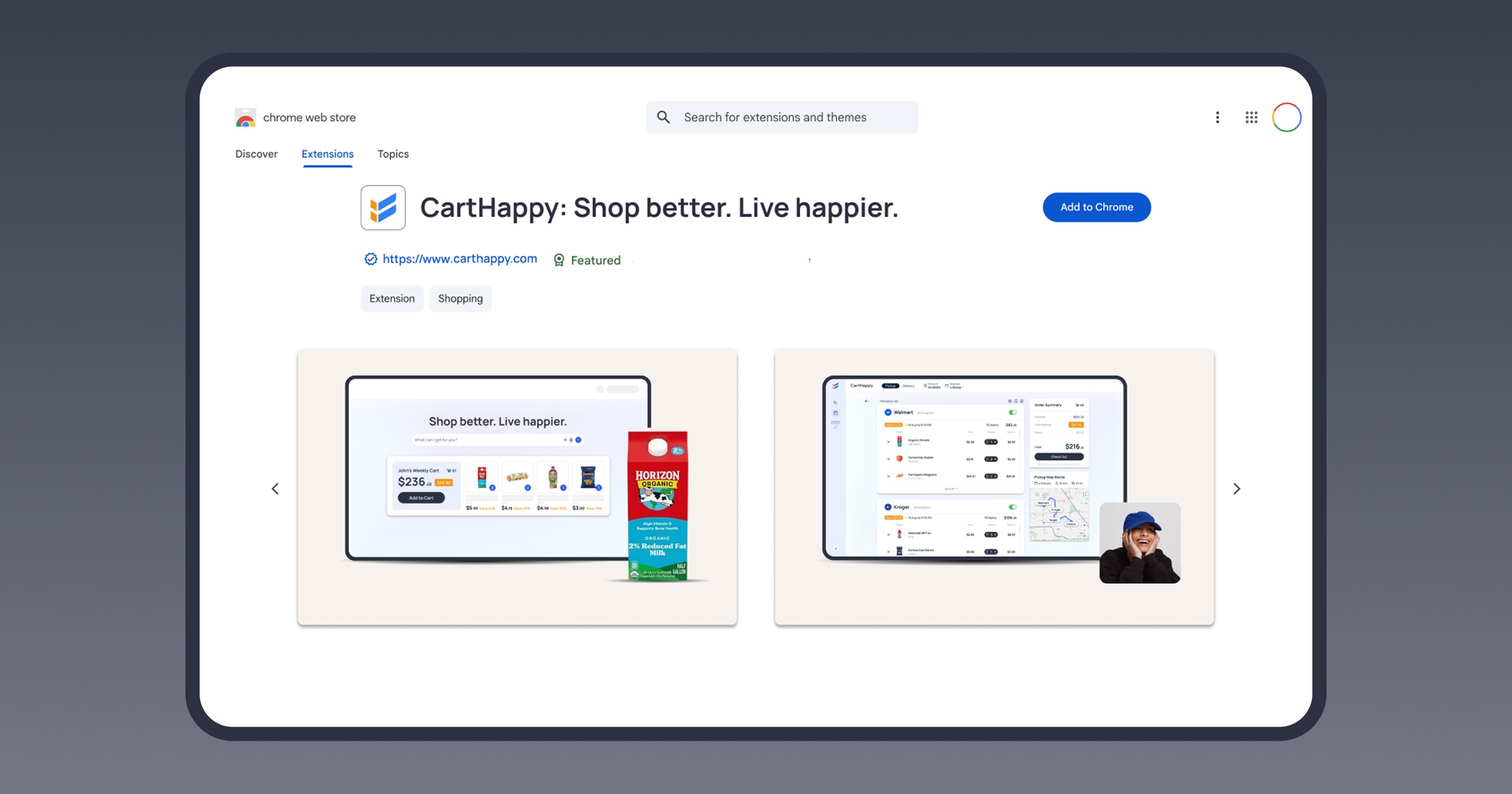
Humans resolve this by looking at the page. AI must be able to do the same. Until retailers modernize their data layers, real-time browsing is the only way to establish ground truth. And real-time browsing isn’t a concept….it’s browser extensions.
The Inevitable Outcome: Data Quality Becomes Competitive Advantage. Just as Google ranks websites based on structure, reliability, and clarity, AI-driven commerce will naturally favor retailers whose data is stable, accurate, and internally consistent. Retailers who invest in clean, trustworthy data will win visibility with agents. AI cannot recommend what it cannot verify - trust becomes the ranking signal.
Why Browser Extensions Are the Bridge to the Future
Retailers will eventually expose real-time, agent-friendly APIs. But “eventually” is TBD. Until then, browser extensions — and browser-level agents — are the only practical mechanism for enabling real-time browsing, aka intelligent shopping at scale. Extensions unlock three critical capabilities that no other layer can reliably provide today:
1. Real-Time Browsing + Live Verification
Agents see exactly what a human sees: live product pricing, real inventory status, precise sizes and quantities, and promotions.
2. Automatic Error Detection and Resolution
Retail systems contradict themselves daily. Live browsing lets agents detect conflicts across APIs, feeds, and websites, and identify the authoritative value, while surfacing valid alternatives within the same retailer or nearby stores. Machines can resolve data conflicts faster, more consistently, and at far greater scale.
3. A Permissioned, User-Controlled Intelligence Layer
Extensions keep intelligence with the user, not the platform. Purchase history, preferences, dietary constraints, sizing logic, replenishment patterns, and budget sensitivity can be shared “locally” with their agent — without broadcasting personal data across the open web. The result is intelligence that is private, user-owned, and consent-based, yet more accurate than any advertiser-driven algorithm (more on this in part III).
Paired with real-time browsing, this creates the ideal environment for extensions to become the scalable foundation of agentic commerce. The signal is already clear — just look at Claude’s Chrome extension launch this week.
Next week, stay tuned for Part III where we examine The Central Role Purchase History Plays in Agentic Commerce Infrastructure
Building Agentic Commerce for Grocery Automation
Agentic Commerce Is the Future of the Internet
Agentic Commerce Is Constrained by Retail Data Infrastructure
Agentic Commerce Needs Real-Time Pricing, Inventory & Execution

Building Agentic Commerce for Grocery Automation
Agentic Commerce Shifts Pricing Power to Consumers

Agentic Commerce Requires Purchase History & Ground Truth